


You finish a range session, set the case on the bench, and the gun still has powder dust on the receiver, fingerprints on the slide, and a little grit around the action. That's the moment when gun cleaning wipes look like the easy answer. Used right, they're a fast maintenance tool. Used wrong, they just move residue around and give you a false sense of clean.
Table of Contents
- What Gun Cleaning Wipes Are
- How Gun Cleaning Wipe Formulations Differ
- When Gun Cleaning Wipes Make Sense
- What Gun Cleaning Wipes Should Not Replace
- How to Use Gun Cleaning Wipes Safely and Correctly
- Safe Storage and Disposal of Used Gun Cleaning Wipes
- Building a Smarter Wipe-Based Cleaning Routine
What Gun Cleaning Wipes Are
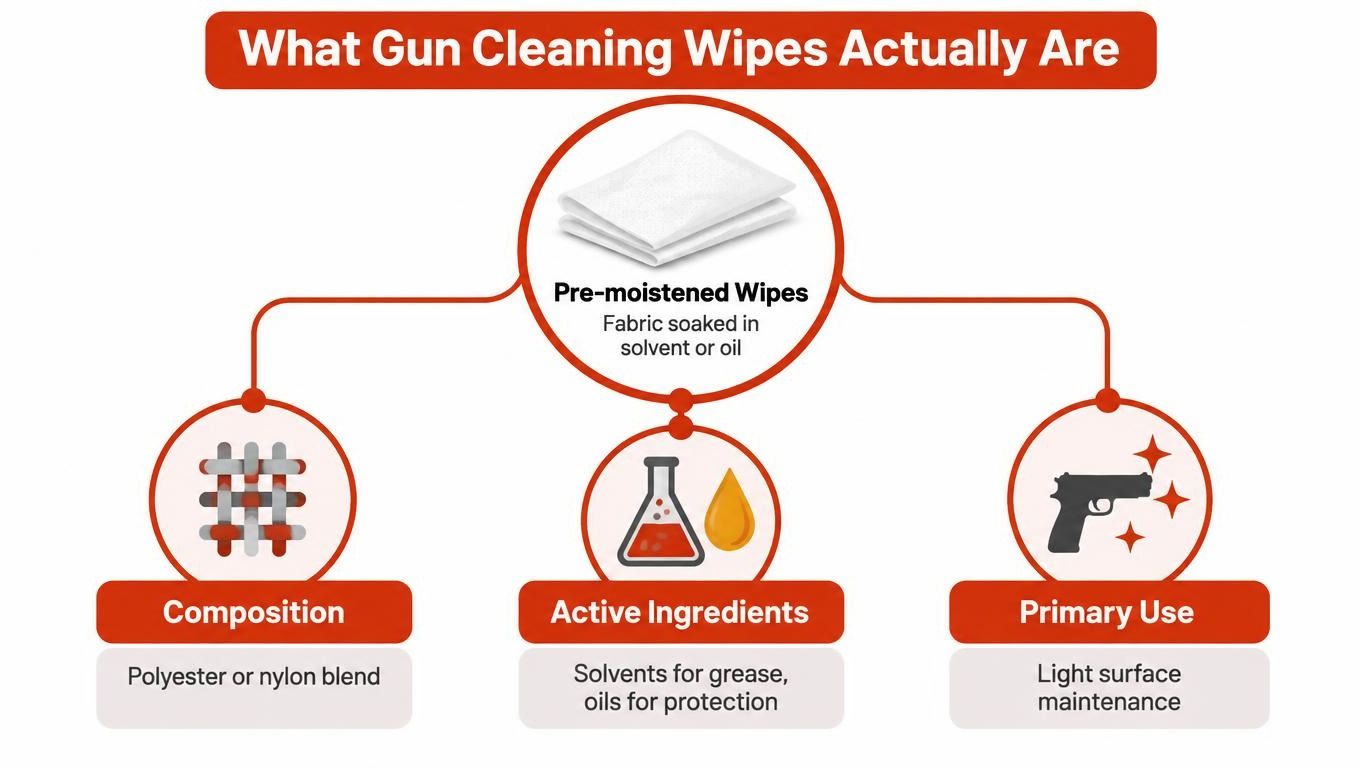
A wipe is useful when a firearm needs controlled surface maintenance, not when it needs a complete cleaning session. Gun cleaning wipes are pre-moistened maintenance consumables designed to carry solvent, oil, or a CLP-style blend across a surface without requiring a bottle, patch stack, and separate rag. Their role is quick exterior residue control, light maintenance after handling, and preparation before storage. They are not a stand-alone replacement for bore work, brushing, or serious carbon removal.
The cloth and the liquid work as one product. Pack sizes vary across current listings, which fits the way owners use wipes as repeat-use supplies rather than novelty items. Some field-oriented products also market the cloth for cutting into strips or using as bore patches. That application depends on the wipe's material, saturation, and formulation, so it should not be assumed to suit every firearm or cleaning task.
The broader maintenance workflow matters too. Handling, transport, and operational readiness all affect when a wipe is useful, as shown by browse Ship Restrict firearms industry solutions. A wipe can support those tasks, but it does not remove the need to match the chemistry to the firearm's surfaces or to dispose of used material responsibly.
What a wipe does
A suitable wipe performs three connected jobs. It lifts loose grime, deposits a thin film of its active ingredients, and provides controlled coverage over exposed metal, polymer, or coated surfaces. That combination makes it practical on a bench, in a range bag, or during transport, where liquid bottles and loose cloths are less convenient.
The wipe should leave the surface cleaner without flooding it. Excess liquid can spread residue, collect dust, or remain where it is difficult to inspect. A dry shop cloth may remove visible dirt, but it does not provide the same repeatable chemistry or corrosion-control behavior.
The importance of a good gun cleaning cloth in firearm maintenance provides useful context for the cloth's role. Wipes belong to the same maintenance family, with saturation and formulation determining how they behave.
Practical rule: use wipes for fast exterior maintenance, then use the appropriate solvents, brushes, and patches for deep fouling.
How Gun Cleaning Wipe Formulations Differ
A wipe that works well on one firearm can be the wrong choice on another if the formulation is off. Some are built to lift light grime quickly. Some leave a lubricating film. Others focus on corrosion control during storage or transport. Treat them as interchangeable and you get uneven cleaning, or residue where you do not want it.
Solvent-heavy wipes
Solvent-heavy wipes lean toward cleaning first. They help break up light oil, dust, and soft carbon on exterior surfaces without pulling out a full bottle of solvent. They still have limits, because a wipe can only hold so much chemistry before it loads up with dirt and stops working well.
They fit a quick post-shooting wipe-down when a proper bench cleaning is still coming later.
CLP-infused wipes
CLP wipes combine cleaning, lubrication, and protection in one disposable cloth. Manufacturer data sheets for synthetic CLP wipes describe a 100% synthetic oil base with extreme-pressure additives, and they often claim broad temperature tolerance along with compatibility with metal alloys, polymers, and finished stocks. The practical value is even coverage, especially on contact surfaces and exposed metal.
That does not replace a real lubrication routine. It gives you a fast, even film where a bottle-and-patch process would take longer.
Corrosion-inhibiting wipes
Corrosion-focused wipes add a different layer. Products in this category can leave behind a vapor-phase inhibitor film that helps protect accessible metal after the visible grime is gone. That matters in humid storage, transport cases, and any situation where fingerprints, sweat, and weather exposure are part of the maintenance picture.
Different tools solve different problems. Wipes are the fast exterior layer, not the whole maintenance stack.
When Gun Cleaning Wipes Make Sense
A wipe makes sense when the firearm needs attention, not a teardown. That can mean a range bag cleanup, a field touch-up, or a storage prep pass after exposure to fingerprints, sweat, dust, or light residue. It works best when speed and portability matter more than full mechanical cleaning.
Good fits in real use
A wipe-first approach fits work that is mostly visual and surface-level. A dusty receiver after transport, a pistol that has been handled often but not heavily fouled, or a shotgun that needs moisture control after a wet day in the field are all practical examples.
The broader maintenance habit still matters, especially if you have already mapped out the essentials in a guide to what belongs in a gun cleaning kit.
A wipe works best when it has one job, clean the exterior, leave a protective film, and return the firearm to safe storage.
Where they stop being the right tool
Wipes fall short once fouling has built up inside the bore, chamber, gas system, or around the bolt face. At that point, you are not really cleaning the working surfaces. You are just moving residue around. Heavy buildup needs brushes, patches, or another dedicated cleaning method.
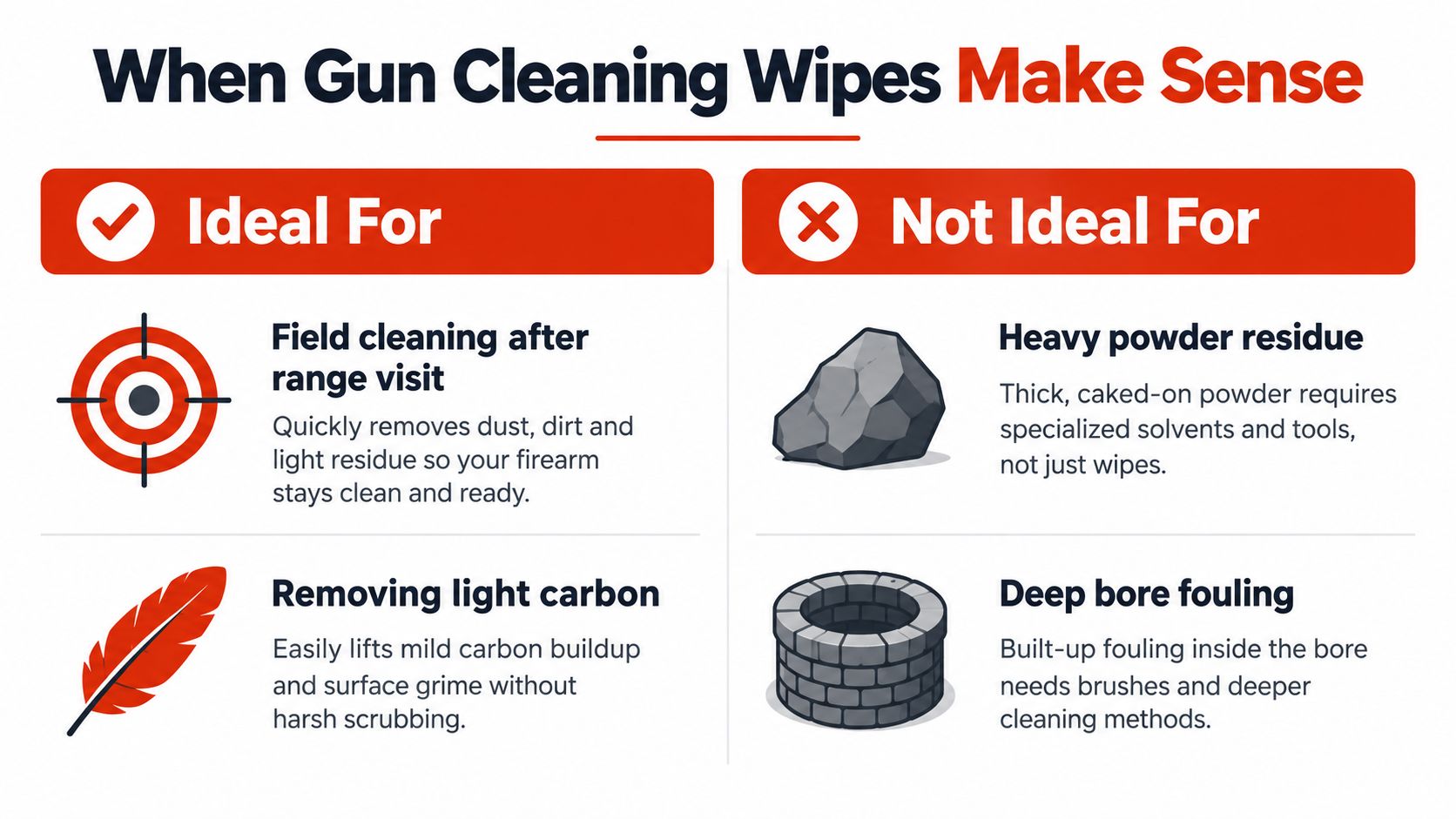
That split explains why some owners reach for a wipe after a short range trip and others leave it on the bench. If the outside is dirty, a wipe is efficient. If the mechanism is caked, the wipe is only a first step, not the solution.
What Gun Cleaning Wipes Should Not Replace
A wipe is useful because it gets the exterior done fast. The risk is treating that convenience like a full cleaning plan. That is how residue gets smeared, lubrication gets uneven, and fouling stays in the places that control cycling.
The parts that still need real attention
Carbon and fouling do not stay on open surfaces. They build up around the bolt face, in the chamber, inside rails and channels, and in action areas a cloth cannot fully reach. Exterior wipe-downs and deeper bore and chamber work serve different jobs for a reason, and field use shows the difference quickly. A gun can look clean and still run dirty.
Use wipes for the first pass, then change tools when the job calls for it. That means bore ropes, jags, brushes, and dedicated solvent still earn their place on the bench. If you are building out the rest of your kit, see what you need in a gun cleaning kit for the core loadout that pairs with wipes. For parts that need deeper treatment, the ultrasonic gun cleaning complete guide is a useful reference.
Why overconfidence causes problems
The common mistake is trusting appearance. A wipe can make the outside look uniform while leaving internal fouling untouched. It can also move dirty lubricant into new places if you keep folding the same contaminated surface over and over.
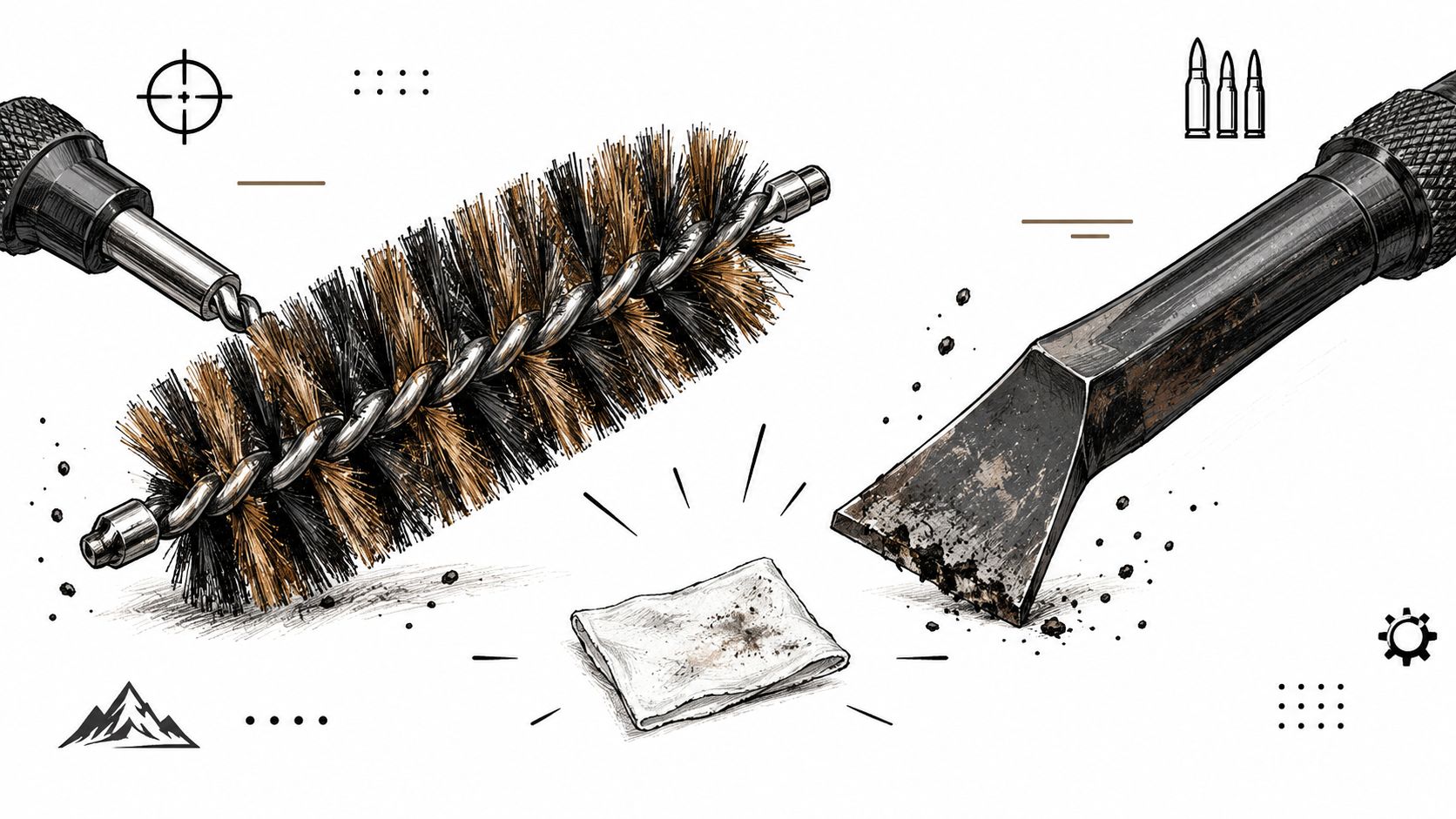
That is why wipes belong in a wider maintenance workflow. They handle quick exterior care and light surface protection. They do not replace mechanical cleaning, chamber care, or proper bore treatment when fouling is built up.
How to Use Gun Cleaning Wipes Safely and Correctly
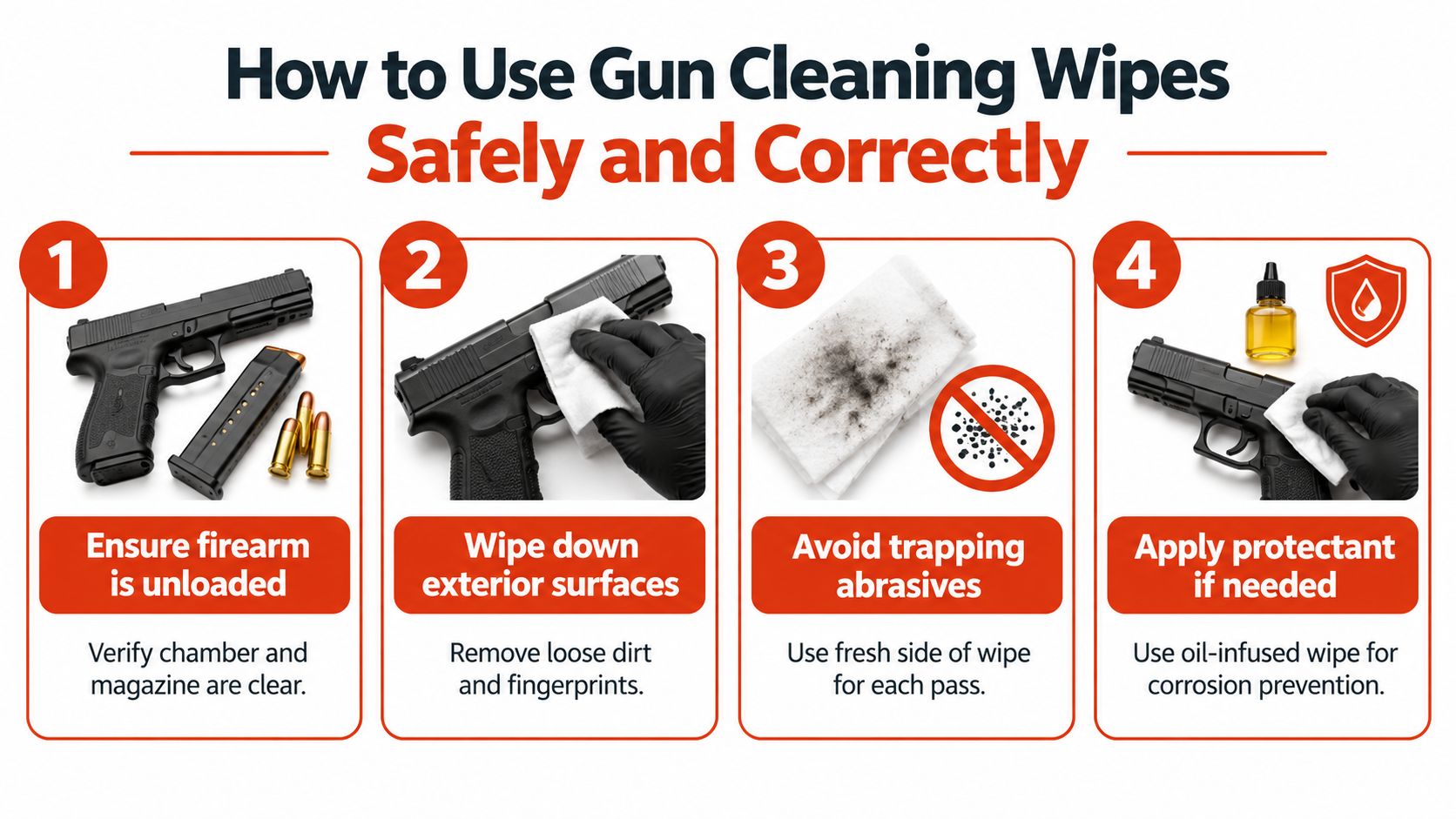
Start with an unloaded firearm and a clear bench. That sounds basic, but it's the only place to begin. Once the gun is verified safe, the wipe can do the job it was made for, controlled exterior cleaning without turning dirt into slurry.
Use the wipe with intent
Work from cleaner areas toward dirtier areas, and use a fresh section of the wipe each time you pass over a surface. That keeps you from dragging grit across the finish. On a pistol, I'd usually start with the slide and frame exterior, then move to the contact points and any exposed metal that picked up fingerprints or moisture.
Coated metals and polymer frames usually tolerate wipe use well, but you still want to avoid flooding seams, optics, and small openings with excess liquid. Blued finishes deserve special care because they'll show fingerprints and corrosion faster if you leave them wet or handle them roughly after wiping.
Match the wipe to the surface
Not every product belongs on every part of the gun. Oil-infused wipes make sense on exposed metal that needs a protective film. Solvent-forward wipes are better when the goal is to lift residue. Optics need restraint, because a wipe meant for steel can leave smears or residue on glass and coated lenses.
If you're not sure, test a small, hidden area first. That's the kind of habit that keeps you from guessing your way into a finish problem.
Keep the wipe on the outside unless you know exactly what the chemistry is designed to contact.
Finish-safe habits
Don't reuse a filthy wipe on a fresh surface. Don't press hard enough to force grit into corners. Don't substitute one saturated cloth for every step in the process. A wipe is a controlled pass, not a sponge bath.
One of the few places where a different option might fit naturally is a purpose-built wipe system from a kit maker such as GuardTech Plus, which already frames cleaning around matched tools and maintenance formats. That's useful when you want consistency across the rest of the bench, not just a one-off cloth.
Safe Storage and Disposal of Used Gun Cleaning Wipes
Used wipes aren't bench clutter, they're contaminated materials. Once they've picked up oil, solvent, grime, or rust inhibitor, they need to be handled like the consumables they are. Leaving them in a pile on the bench invites mess, odor, and avoidable risk.
Handle them like maintenance waste
Put used wipes somewhere temporary and separated from heat sources while you finish the rest of the cleaning. If a wipe is heavily saturated, don't toss it into a sealed mess with other debris and forget about it. Keep the workspace organized, and treat solvent-wet materials as something that needs proper disposal, not just cleanup.
The same safety mindset shows up in the understanding firearm cleaning safety protocols resource, which reinforces the idea that maintenance is a controlled process, not a casual one.
Keep the bench clean and the bag cleaner
A used wipe in a range bag can transfer residue to other gear, documents, or clothing. That's why a separate disposal step matters. If you've ever opened a bag and found old cleaning material still damp, you already know how fast a simple chore turns sloppy.
A breathable temporary container is better than piling soaked cloths in a corner. The goal is to move from use to disposal without creating another contamination problem in the middle.
If a wipe has done its job, it should leave the firearm cleaner, not the workspace messier.
Used materials also deserve practical disposal once the session is over. Clean benches, clean hands, and a clean trash routine keep the next maintenance session easier and safer.
Building a Smarter Wipe-Based Cleaning Routine
A good wipe routine starts with inspection, not product choice. Look over the firearm, decide whether you're dealing with surface grime or real fouling, and then choose the tool that matches the job. If the gun only needs a wipe-down, use one. If the action is dirty or the bore is fouled, move to the proper cleaning gear.
A simple decision flow
- Exterior dust, fingerprints, or moisture: use a wipe for fast surface cleanup.
- Light protection before storage: use an oil- or CLP-infused wipe on exposed metal.
- Visible carbon or gritty buildup inside the gun: switch to brushes, patches, or a deeper cleaning method.
- Corrosive exposure or heavy fouling: don't stop at wipes, do the full maintenance routine.
That approach keeps wipes in the right role. They're the fast layer of maintenance, not the end of it.
What a smarter routine looks like
In practice, that means wiping after shooting, checking the gun before storage, and scheduling deeper work when residue starts to build. It also means paying attention to the parts that get missed most often, like contact surfaces and areas where moisture sits after handling. The result is less wear, fewer surprises, and a cleaner handoff between range use and storage.
The main advantage is consistency. A wipe-based routine keeps you from skipping the first pass because the whole job feels too big, and it keeps you from pretending a wipe is enough when it clearly isn't.
If you want a maintenance setup that supports that kind of routine, GuardTech Plus offers firearm cleaning kits, bore ropes, brushes, patches, and protective eyewear that fit a practical bench workflow. Use the right wipe for quick maintenance, then keep the rest of the kit ready for the jobs a wipe can't finish.
Prepared with Outrank tool


